
"honey will"
10000 article(s) found

How to treat Costa Rican honey by planting in producing areas
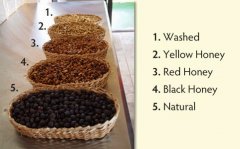
Professional barista communication please follow the coffee workshop (Wechat official account cafe_style) yellow honey, red honey, black honey treatment, where is the difference? When you want to buy honey-treated coffee, you usually have the choice of yellow honey, red honey and black honey. You may have heard of these honey treatments to retain the percentage of pectin layer, and what does this mean? The coffee farmers' association classifies the coffee
Coffee black honey treatment method is to leave how many percent of the mucous membrane? what is honey processing coffee beans?
4. Honey treatment Today, honey treatment is used in almost all the producing areas of Costa Rica. This method is also widely spread throughout Central America. Because the surface mucosa of coffee beans is extremely sticky and smooth and the sugar content is extremely high, it is often called honey. In the process of honey treatment, coffee will leave some or all of the honey when it is dried. After picking, grading and peeling the coffee fruit, it will be

Costa Rican black honey hand data brewing method how to drink Costa Rican black honey coffee
For the exchange of professional baristas, please follow the black honey made by hand in the coffee workshop (Wechat official account cafe_style). 15g powder, medium grinding (small Fuji ghost tooth cutter 4 grinding), v60 filter cup, 88-89 degrees water temperature, 30g water injection for the first time, steaming for 27 seconds, water injection to 105g water cut off, wait for the water volume of powder bed to be reduced to half and then water injection, slow water injection until 225g water, do not use water at the end.

Pectin retention more dense processing method sweeter yellow honey red honey black honey white honey what is the difference?
Professional coffee knowledge exchange More coffee bean information Please pay attention to coffee workshop (Weixin Official Accounts cafe_style) honey treatment method, called HoneyProcess or Miel Process, called Honey Coffee, Costa Rica (Costa Rica), Panama (Panama) and Guatemala (Guatemala) and other coffee gardens have adopted this method. so-called honey treatment

What is Coffee Mozart?| Exclusive honey treatment Raisin honey treatment| Mozart Coffee
Professional coffee knowledge exchange More coffee bean information Please pay attention to coffee workshop (Weixin Official Accounts cafe_style) Coffee Mozart's exclusive honey processing method to create a special flavor is located in the highest altitude area of Tarrazu coffee cultivation in Costa Rica. This area is the most intensive fruit planting area in Costa Rica. The manor is mainly planted with passion fruit, and the amount of coffee is similar.

Taste difference between honey-treated coffee beans and water-washed coffee beans classification of honey-treated coffee beans
Professional coffee knowledge exchange more coffee bean information please follow the coffee workshop (Wechat official account cafe_style)

Coffee bean honey treatment-coffee bean treatment suitable for pressure pot
Coffee and bean honey treatment-coffee beans suitable for the French kettle, so how long will it take to treat coffee beans? If you want to get the sun just right, you need to keep a close watch over the whole process. First of all, manage the sun field, and then turn the coffee beans every few hours so that they can be dried evenly; shake the drying bed from time to time to turn the coffee over the next week or so. Honey place

Introduction of Yunnan Huangmi Coffee Flavor description Grinding Calibration quality treatment method Manor
Beans treated with Yunnan coffee honey need to be well ventilated in the sun, otherwise the retained pectin mucosa is easy to ferment or mildew and cause bad smell. If you are exposed to the sun directly in the cement or on the ground with soil, it is easy to scratch and cut the coffee beans, which will lead to the invasion of bacteria, and the direct soil sun will make the coffee beans taste like dirt. (like the early Mantenin belt
Distinguishing HONEY Flavor characteristics of Red Honey, Yellow Honey and Black Honey in Costa Rican Coffee
Professional coffee knowledge exchange more coffee bean information please pay attention to the coffee workshop (Wechat official account cafe_style) Costa Rica Tobushi garden red honey treatment temperature, grindness, powder than the recommended coffee has been rooted in Costa Rica for more than 200 years, although the land area is only the third to last among Central American producing countries, it is not feasible.
What is "Honey Process"?
Http://blog.seattlecoffeeworks.com/roastery/earth-honey-process/ do you know where coffee comes from? Today, we have carefully prepared this article for your readers. The article gives a rough account of how coffee beans change from fruit to mellow coffee. Among them, we focus on the raw bean treatment process of coffee, as well as

Costa Rica Black Honey Costa Rica Black Honey Coffee Beans Costa Rica Black Honey Coffee Flavors
Professional coffee knowledge exchange More coffee bean information Please pay attention to Coffee Workshop (Weixin Official Accounts cafe_style) This is the basic coffee treated with yellow and red honey. Black honey differs from yellow or red honey by the time the mucus dries on the beans. Black can dry for 48 hours, yellow and red can dry for 12 hours and 24 hours. This coffee has a pleasant, intense sweetness.

Taste description of Costa Rican Red Honey treated Coffee beans introduction to the characteristics of Costa Rican Lajas Coffee
Professional coffee knowledge exchange more coffee bean information please follow the coffee workshop (Wechat official account cafe_style) Costa Rica Tobusch Garden Red Honey treatment hand temperature, grindness, powder ratio recommended Central American flavor: honey, caramel, nut aroma, candied plum, candied aroma, vanilla,

How does Costa Rican coffee taste? how do you treat coffee beans with yellow honey, red honey and black honey? how do you feel sweet?
Professional coffee knowledge exchange more coffee bean information please follow Coffee Workshop (Wechat official account cafe_style) Front Street-Costa Rica Black Honey Coffee sharing Costa Rica is the country where coffee was first introduced to Central America and has a long history. Coffee organization has a complete system from production to marketing. Because it is located in the Central American Gap, the territory is full of volcanoes and has the natural advantages of sunshine and land.

Does the degree of honey treatment directly depend on the amount of pectin retained? What is Golden Honey treatment?
Professional barista communication please follow the coffee workshop (Wechat official account cafe_style) honey treatment, which is almost synonymous with Costa Rica! Honey treatment was first born to improve the fermented water washing method, which has a history of hundreds of years. There are two kinds of water washing methods, one is the traditional water washing method which consumes a lot of water, and the other is scraping and adhering to the coffee seed in a mechanical way.

In addition to the sun, washing and washing, there is also a method called honey treatment.
Http://blog.seattlecoffeeworks.com/roastery/earth-honey-process/ do you know where coffee comes from? Today, we have carefully prepared this article for your readers. The article gives a rough account of how coffee beans change from fruit to mellow coffee. Among them, we focus on the raw bean treatment process of coffee, as well as

Suggestion on making Black Honey Coffee at Bosnian Manor in Nicaragua. Is brownie delicious with Black Honey?
Professional coffee knowledge exchange more coffee bean information Please pay attention to the coffee workshop (Wechat official account cafe_style) Honey treatment and peeling sun treatment will have a fuller Body, generally speaking, the more pectin from coffee cherries when coffee beans are dried, the more mellow Body can be tasted in coffee. Black honey coffee beans are usually famous for their honey syrup-like sweetness, such as

Costa Rican coffee beans Why honey processing Flavor characteristics Planting history Distribution of producing areas
Professional barista communication, please pay attention to coffee workshop (Weixin Official Accounts cafe_style ) Why honey treatment is popular with coffee farmers? Honey processing started in Costa Rica when some people saw that this process could continue to improve the quality of their coffee beans, and this process is now in full swing. So why did Costa Rican coffee farmers plan to treat it with honey in the first place? Dangka

What are the characteristics of Costa Rican coffee bean honey treatment? manor variety producing area
Professional barista communication please pay attention to the coffee workshop (Wechat official account cafe_style) honey treatment why so beautiful? When honey treatment is so difficult and time-consuming, you may wonder if it's really worth it. There's no doubt it's worth it. Honey-treated coffee generally has a great balance of sweetness and acidity, and its flavor is generally not as strong as that of sun-cured coffee.

Coffee sun treatment-honey treatment coffee beans are washed in the sun
Coffee sun treatment-honey treated coffee beans are washed in the sun according to the time of sun exposure and the amount of pectin, and the amount of pectin and endocarp determines the time of sun exposure. Yellow honey has 25% endocarp, 50% red honey and 100% black honey. Therefore, from yellow honey to black honey, the drying time is longer, and the management requirements are more stringent. Honey treatment is a complex and expensive item.

Costa Rican Shumawa Manor Black Honey Coffee flavour what are the characteristics of Costa Rican coffee
Professional coffee knowledge exchange more coffee bean information please follow the coffee workshop (Wechat official account cafe_style) Costa Rica has seven coffee producing areas, of which Tarazu, the central valley and the western valley are the three best-known and best-quality areas. Finca Sumava de Lourdes is located in the western valley of Costa Rica, near Orange County.